Torture charges corroborated in Peru
Yesterday, my colleague Keith in Washington, DC, released a paper about violence in Peru over mining.
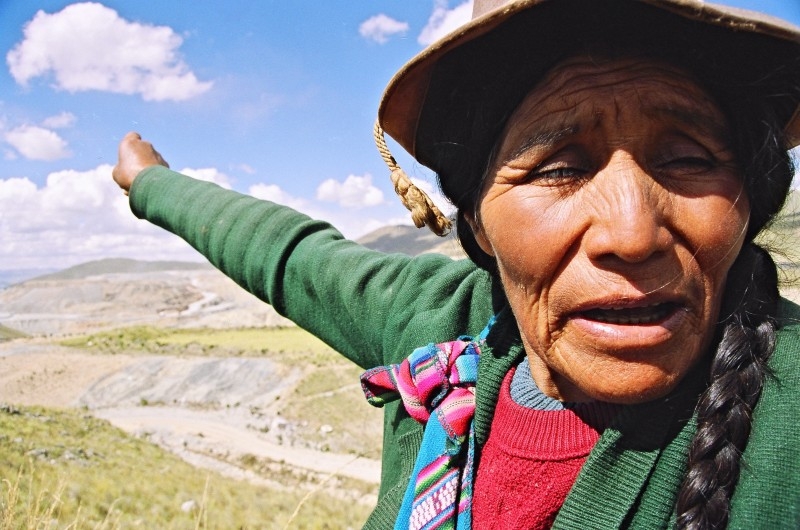
Over the years I have visited a few communities in Peru where violent conflict has erupted; I have spoken with people who’ve been beaten, imprisoned, or persecuted by the government for standing up for their rights. The alleged crimes vary. Refusing to sell your farm to a mining company—or holding out for a better price—comes up a lot. One indigenous woman from the highlands of Cusco told me how the police threw her in jail, accusing her of trespassing on her own land! Her farm is now part of a copper mine. It took two decades before she was compensated as part of a conflict-resolution effort Oxfam helped create. It took years to sort out the rights violations, relocate farmers, and set up a development fund.
Right now, the same mistakes are being made in northern Peru, where a British and Chinese mining company is trying to set up a copper mine in the Rio Blanco region. Again, a mining project is moving ahead without regard for the rights of local farmers. In 2005, the company began exploring on community land without proper permission. A group of campesinos marched to the mine site. Twenty-eight were arrested, beaten, tortured, and released three days later. New facts about these events recently came to light when someone leaked photos of the detained campesinos—hooded and bloodied—to Peru’s National Human Rights Coordinator.
(See Amnesty International’s Urgent Action on the case of journalist Julio César Vásquez Calle, a radio reporter and one of the detained people, who since has received death threats.)
These photos finally corroborate the allegations the survivors made to the public prosecutor and the state medical examiner—neither of whom acted responsibly on the complaints. Peru’s National Human Rights Coordinator has brought charges against both these officials.
Keith makes some concrete recommendations to help Peru earn money from mining while protecting human rights and the environment.
I always think about Amartya Sen’s message in Development as Freedom: Development is about more than making more money and improving a country’s standard of living. It is also about increasing freedom. I’d argue that all mines in Peru should produce not only metal, they should also create greater freedom. Otherwise, the cost of mining is too great.
Does anyone reading this have any good suggestions on how mining in Peru can go from violence to freedom?